
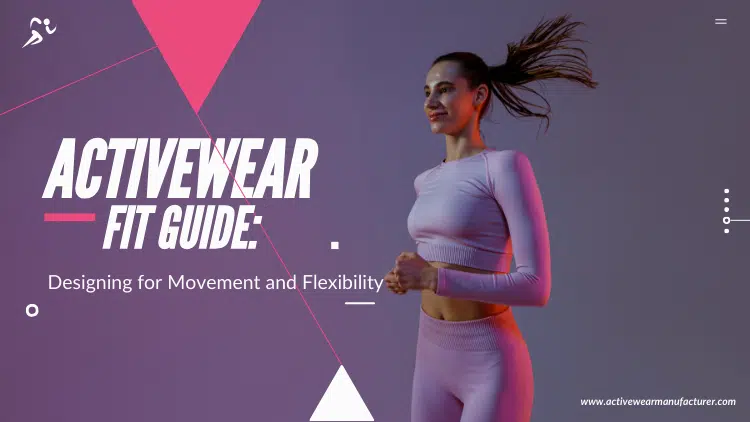
Activewear Fit Guide: Designing for Movement and Flexibility
Article Overview
- Why Fit Matters More in Activewear than Everyday Clothing?
- Understanding the Body in Motion
- Fabric Selection and Stretch Performance
- The Role of Compression in Fit Design
- Pattern Engineering and Construction Techniques
- Designing for Different Activities
- Inclusivity and Body Diversity in Fit Design
- Testing Fit Through Real Movement
- The Future of Movement-Focused Activewear Design
When it comes to activewear fashion, it is not about branding or aesthetic elements anymore. It is now mostly about performance-driven clothing. This type of clothing is designed to support the body when wearers are in motion and working out. It is important to ensure proper fit, so that they can feel confident, comfortable and functional when they perform intense activities.
While designing activewear for movement and flexibility, designers need to have an in-depth understanding about how the body moves. They should also know about how fabrics react to stress and how various construction techniques can impact the performance of wearers.
Why Fit Matters More in Activewear than Everyday Clothing?
Activewear is unlike casual or formal wear. It needs to move along with the body. Ill-fitting apparels can cause friction, restrict circulation, ride up, or lose shape mid-workout.
Such issues can cause discomfort, affecting both focus and performance. When activewear outfits fit well, wearers can move freely without any distraction. Thus, when it comes to high-quality activewear design, proper fit is regarded as a basic necessity.
Understanding the Body in Motion
When it comes to designing for movement, apparel designers have to study biomechanics. This is because the human body does not move in a straight line. It bends, twists, expands and compresses. The most dynamic movements are felt in the knees, hips, shoulders and waist areas.
Thus, designers have to come up with activewear items that can accommodate all these changes without sagging or pulling. For instance, tops must allow full shoulder rotation without lifting excessively at the hem. Leggings need to be more flexible around the knees and hips. When designers have to keep motion in consideration, they have to make sure that the garments that they design perform consistently, regardless of the activity.
Fabric Selection and Stretch Performance
It is important to choose the right fabrics to ensure flexibility. Modern activewear items are mostly made up of stretch fabric that are highly elastic and can retain shape. Stretch allows expansion of the garment with movement. Recovery ensures easy return to original shape.
Four-way stretch fabrics are particularly effective. These can support multidirectional movement and stretch vertically as well as horizontally. Breathability and moisture management are also essential. Too much sweat can make fabrics heavy and uncomfortable. These can affect the fit of apparels during prolonged activity.
The Role of Compression in Fit Design
Compression is not tightness, as it is often misunderstood to be. In activewear fashion, it serves a functional purpose. When compression is proper, it can support muscles, reduce fatigue and improve blood circulation. However, it is important to remember that excessive compression can cause discomfort by restricting movement.
It is necessary to have balanced compression zones that can offer effective support without reducing flexibility. For example, compression leggings may offer firmer support around the calves and thighs while allowing flexibility at the joints, to allow full range of motion.
Pattern Engineering and Construction Techniques
Fit is not determined by the choice of fabric only. Pattern engineering has a very important role to play in how activewear apparels behave during motion. These garments adapt to body movements easily, when these come with strategically placed gussets, contoured panels, and articulated seams.
The presence of flatlock seams manages to prevent chafing and reduce friction, especially in high-movement areas. Waistbands are also designed carefully, to stay in place without digging into the skin. While performing intense workouts, these can keep wearers stable. Every seam and panel placement affects how activewear garments stretch, support, and recover.
Designing for Different Activities
Not all movement is the same. The fit of activewear needs to reflect that. For Yoga and Pilates, it is important to source apparels with maximum stretch and minimal compression, which can allow flexibility and deep poses.
Running apparels need to have secure fits, which can stay breathable as well as reduce bounce and friction. Strength training clothing should be able to stretch well, handle repetitive stress and last for a long time.
While designing activity-specific fits, designers need to ensure that each garment performs optimally for its intended use. These are not a one-size-fits-all solution anymore, and can be tailored to the needs of consumers.
Inclusivity and Body Diversity in Fit Design
While coming up with movement-friendly designs, designers should also account for diverse body types. The best activewear needs to support varied body shapes, sizes, and proportions without compromising flexibility or comfort.
When there are adjustable features such as elastic panels or drawstrings, as well as adaptive pattern grading and inclusive sizing, it is possible to make activewear items fit a wider consumer section. When activewear fits well on different body types, wearers can feel more confident and wear the apparels long-term. It can boost customer loyalty and make a brand look more trustworthy.
Testing Fit Through Real Movement
Fit design does not end at the sketch or prototype stage. It is important to test it in the real world to determine how the garments will perform when wearers work out actually.
Wear-testing during workouts can reveal issues such as:
- Slipping waistbands,
- Fabric overstretching, or
- Seam discomfort
When designers refine constantly, based on movement testing, they can adjust flexibility and fit before final production. With this process, they can make sure that the finished product will be able to make buyers feel comfortable as well as satisfy their functional requirements.
The Future of Movement-Focused Activewear Design
As fitness lifestyles continue to evolve, activewear fit will become even more movement-centric. Today, you can see more precise fit customization due to:
- Advancements in fabric technology,
- Digital pattern mapping, and
- Body-scanning tools
The future of activewear lies in garments that adapt seamlessly to the body. It should support natural movement rather than restrict motion. Brands that offer flexibly designed activewear will manage to stand out in an increasingly competitive market.
Whether you happen to own a retail store or a private label brand, you have to be mindful of the kind of activewear designs that you plan to offer to your consumers. When fit is engineered with intention, it becomes a functional extension of the body. That is what your customers need. And you have to offer well-crafted activewear, accurately designed for movement and flexibility. Partner with the right activewear manufacturers in chicago and things will get much easier for your brand.